
Why the Repair-or-Replace Decision Matters
Table of Contents
Commercial roofing decisions should not be based on appearance alone. A roof can look weathered and still be a candidate for restoration, while another roof with only a few visible issues may contain wet insulation, damaged decking, or failing seams beneath the surface. A careful review helps owners protect the building, control risk, and direct capital toward the option that fits the roof’s actual condition.
For owners considering a fluid-applied system, experts at https://www.deltaservices.com/roof-restoration-roof-coatings/ can provide a middle path between routine repairs and a complete tear-off. The right approach depends on the roof assembly, the history of leaks, the building’s use, available budget, expected service life, and whether the existing system can support restoration work.
Start With a Complete Roof Condition Review
A useful roof assessment goes beyond locating today’s leaks. It should examine the membrane or roof surface, seams, flashings, curbs, drains, penetrations, insulation, roof deck, rooftop equipment, and areas exposed to regular maintenance traffic. Repair invoices, warranty documents, and prior inspection reports can also reveal patterns that are not obvious during one walkthrough.
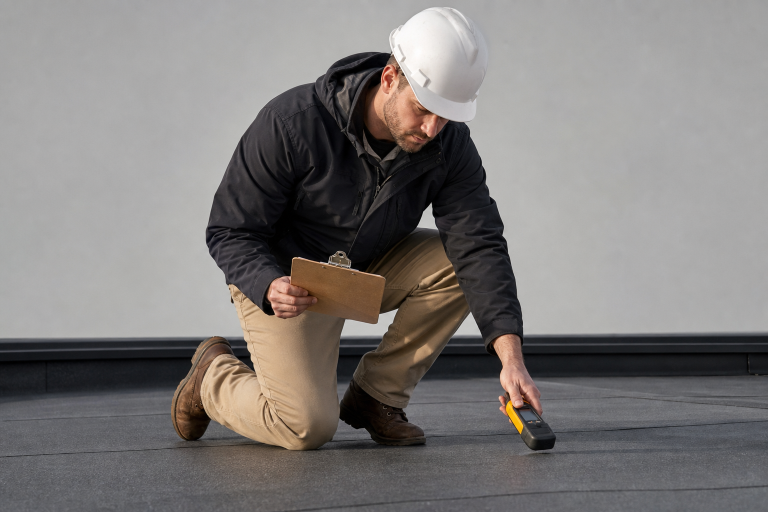
During the review, look closely at recurring leak locations, ponding water, splits, blisters, cracks, exposed fasteners, deteriorated sealant, loose flashing, and changes made by HVAC, electrical, or communications crews. Suspected moisture should be investigated rather than simply covered. Wet insulation can reduce thermal performance and may point to a larger failure within the roof system.
When Roof Restoration May Make Sense
Restoration is generally most appropriate when the roof has a sound base that can be repaired and protected. The work may include cleaning, localized membrane repairs, seam treatment, reinforcement at details, flashing work, and installation of a compatible coating system. The purpose is to extend the usable life of a roof, not to conceal a failing assembly.
Conditions that may support restoration include:
- The roof deck remains structurally sound.
- Moisture is limited to defined areas that can be removed or repaired.
- The existing membrane retains sufficient integrity for the planned system.
- Drainage problems can be corrected or reasonably improved.
- Seams, penetrations, curbs, and wall transitions can be properly detailed.
- The selected coating is compatible with the existing roof material.
When Full Replacement Is Usually the Better Choice
Replacement is often the more responsible decision when a roof has widespread saturation, extensive deterioration, damaged decking, repeated failures across multiple areas, or drainage conditions that cannot be addressed through repairs. A coating system is not a cure-all. Applying one over trapped moisture or unstable materials can postpone visible symptoms without resolving the cause.
Property managers should request clear evidence when restoration is proposed for questionable areas. That may include moisture testing, documented inspection findings, photographs of deficiencies, and a written explanation of which sections will be repaired, removed, or left in place. A defined scope helps distinguish a genuine restoration plan from a cosmetic short-term fix.
How Reflective Roof Systems Affect Building Performance
A reflective, or cool, roof is designed to reflect more sunlight and release more of the heat it absorbs than a conventional dark roof surface. According to the EPA’s guidance on cool roofs, these properties can reduce heat transfer into a building and may reduce air-conditioning demand in appropriate conditions.
The potential value varies by climate, insulation levels, building operation, HVAC equipment, roof design, and maintenance. Reflective roofing is often especially relevant for low-slope commercial roofs exposed to strong summer sun. It should be considered as one part of a larger building-performance plan that also addresses insulation, air sealing, equipment maintenance, and drainage.
Common Commercial Roof Coating Options
Different coating types serve different roof conditions. No single product is the best fit for every building, and material selection should account for the existing membrane, water exposure, foot traffic, chemical exposure, climate, and manufacturer requirements.
- Acrylic coatings: Often selected for reflective applications and ease of installation, but standing water may require special consideration.
- Silicone coatings: Often considered for roofs that experience persistent water exposure, provided the surface is prepared for reliable adhesion.
- Polyurethane coatings: Often used where added toughness and resistance to service traffic are important.
- Other fluid-applied systems: May be specified for particular roof materials, details, or performance objectives.
Product selection alone does not determine success. Surface preparation, reinforcement, application thickness, weather conditions during installation, curing time, and ongoing maintenance all influence the finished system.
The Preparation Steps That Should Not Be Skipped
Preparation is often the foundation of a reliable restoration project. The roof should be cleaned to remove dirt, loose material, oils, biological growth, and debris that could interfere with adhesion. Contractors should then identify wet materials, repair splits and seams, secure loose components, and address drains, curbs, penetrations, and edge details before coating begins.
Where compatibility is uncertain, test areas can help confirm adhesion. High-stress locations may need reinforcement as specified by the system manufacturer. After application, the contractor should verify coverage and installed thickness, and then provide project documentation identifying completed repairs, materials used, and maintenance expectations.
How Weather and Building Use Affect the Plan
Weather affects both the roof’s condition and the installation schedule. Rain, humidity, temperature, wind, snow, and temperature swings can influence cleaning, adhesion, curing, and safe access. A good plan accounts for forecast windows and includes a process for protecting unfinished work if conditions change.
Building use matters as well. Warehouses, schools, health care facilities, retail sites, and manufacturing buildings may need phased work, controlled access routes, communication with occupants, or coordination around critical equipment. Roofing work should support business continuity as much as possible while maintaining safe jobsite practices.
Questions to Ask Before Signing a Roofing Proposal
- What inspection findings show that restoration is suitable?
- How was hidden moisture evaluated?
- Which areas require removal, replacement, or repair before coating?
- What cleaning and preparation work is included in the price?
- How will seams, drains, curbs, penetrations, and roof edges be treated?
- What application thickness and reinforcement details are specified?
- How will weather-related delays and access to occupied buildings be managed?
- What maintenance is required, and what does the warranty cover?
- What documentation will be delivered when the project is complete?
Cost Factors Beyond the Initial Bid
The lowest proposal is not always the lowest long-term cost. Compare the full scope, including preparation, moisture removal, insulation or deck repairs, access requirements, safety measures, equipment coordination, coating thickness, reinforcement, warranty terms, and future maintenance needs.
For example, limited roof access can increase labor and equipment requirements. Occupied facilities may need special scheduling. Wet materials may need to be removed before restoration can proceed. Those costs can change a proposal, but omitting necessary work may create a more expensive problem later.
A Simple Decision Path for Property Managers
- Collect past repair records, warranties, and inspection reports.
- Arrange a detailed roof condition assessment.
- Investigate suspicious areas for trapped moisture.
- Separate localized, repairable defects from broad system failure.
- Compare restoration and replacement based on scope, risk, service-life expectations, and maintenance.
- Request written proposals that clearly outline preparation, repair, and warranty terms.
Frequently Asked Questions
Can Every Commercial Roof Be Coated?
No. Suitability depends on the roof condition, structural support, moisture levels, drainage, surface compatibility, and the selected coating system.
Does a Roof Coating Stop All Future Leaks?
A properly installed coating system can improve water resistance, but it does not eliminate the need for routine inspections, drainage care, maintenance, or prompt repairs after new damage occurs.
How Often Should a Restored Roof Be Inspected?
Many owners schedule inspections at least twice each year and after significant storms. The appropriate interval should also reflect the roof system, climate, building use, and warranty requirements.
What Is the Biggest Warning Sign of a Poor Restoration Plan?
A vague proposal is a major concern. Moisture evaluation, preparation methods, repair details, coating thickness, project documentation, and warranty conditions should be clearly described before work begins.
Conclusion
Commercial roof restoration and replacement are not interchangeable choices. When a roof is dry, stable, and repairable, restoration may extend service life and renew protection. When damage is widespread or hidden conditions are severe, replacement may offer a more dependable solution. The strongest decision is supported by a thorough assessment, realistic performance goals, careful preparation, and a maintenance plan that continues after the project is finished.